Tree Cabling & Bracing

Steel Cabling & Bracing to Save Valuable San Angelo Trees

Heavy-duty steel cabling and bracing that supports massive trees with weak structural unions.

Typical Range
$300–$2,500
per tree (varies by size & hardware)
★★★★★ 4.9 on Google
Fully Licensed & Heavily Insured
24/7 Rapid Dispatch
ISA Certified Arborist on Staff
15+ Years Experience
Sound Familiar?

Why San Angelo Property Owners Call Us for Tree Cabling & Bracing

A Heritage Tree Has a Dangerous Crotch

A prized oak or pecan has co-dominant stems or a weak union that worries you every time the wind picks up.

You Want to Save the Tree, Not Remove It

Cabling and bracing can extend the safe life of a valuable tree for years. Removal is not always the only answer.

You Are Not Sure If It Is a Candidate

Not every tree can be cabled. We assess the structure against ANSI A300 standards before recommending hardware.

Previous Work Was Done Wrong

Old cabling with improper hardware can be worse than no cabling. We assess and replace where needed.

When Removal Is Not the Answer

A heritage oak or pecan with a weak crotch or co-dominant leaders is not automatically a candidate for removal. If the wood at the union is still sound and the rest of the tree is healthy, static or dynamic cabling and through-rod bracing can redistribute load away from the weak point and hold split-prone wood together — often extending the safe life of the tree by decades.

The catch is honest candidacy. Not every problem tree can be braced. Included bark, extensive heartwood rot, or Ganoderma at the root collar all rule out bracing. That is why the answer starts with an assessment, not a sales pitch.
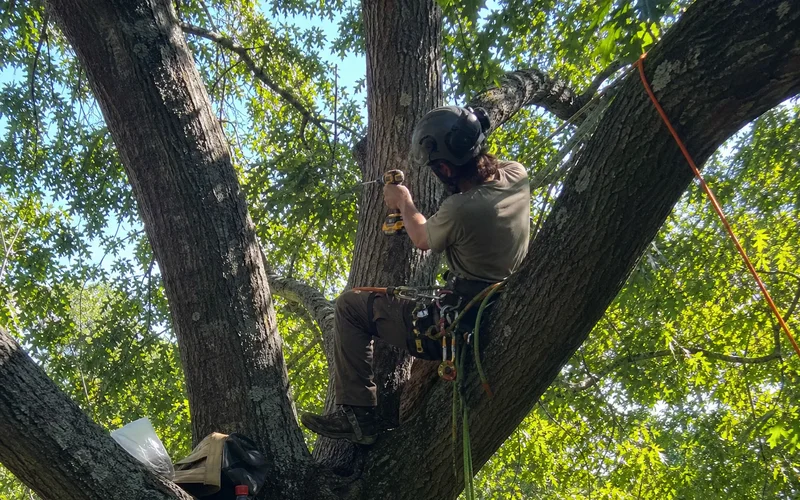
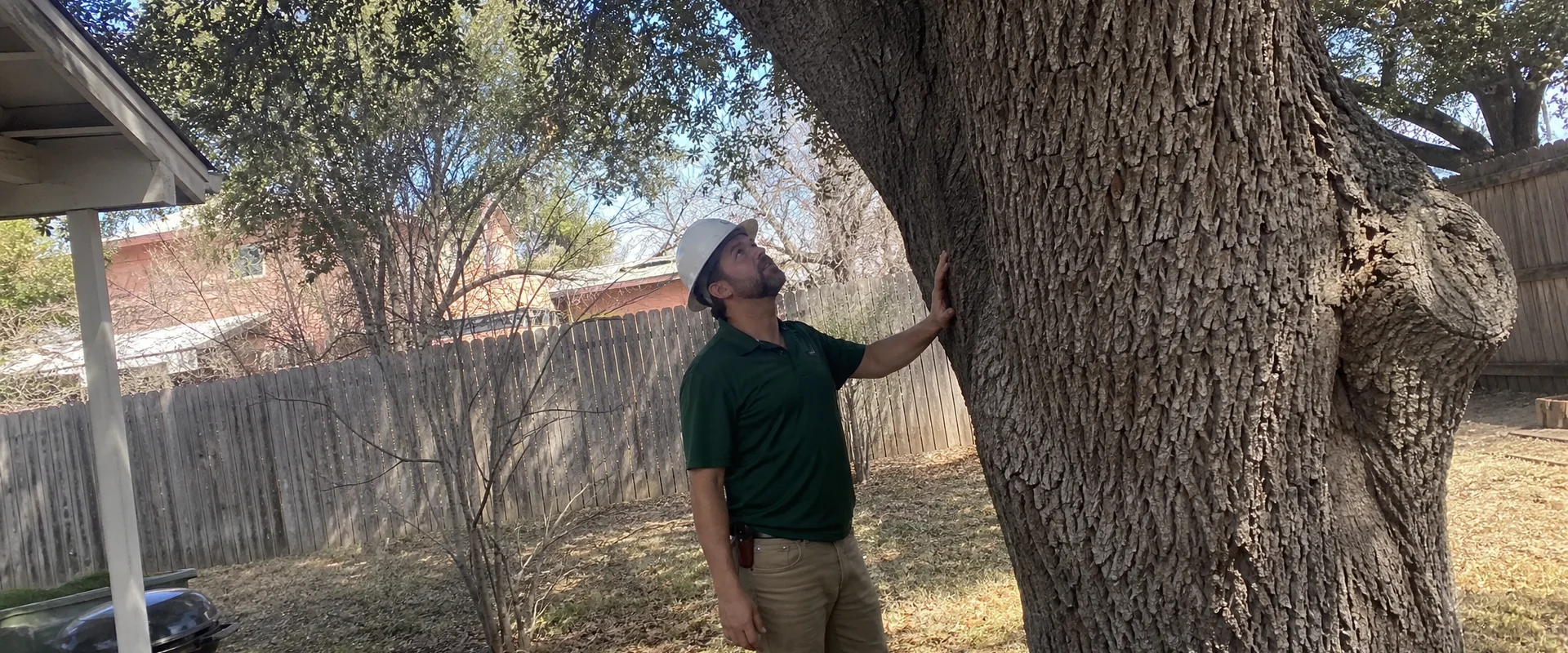
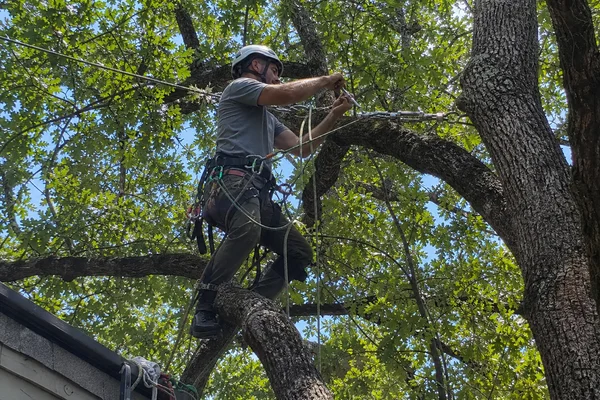
Arborist installing hardware in a co-dominant leader

What Bracing Actually Does

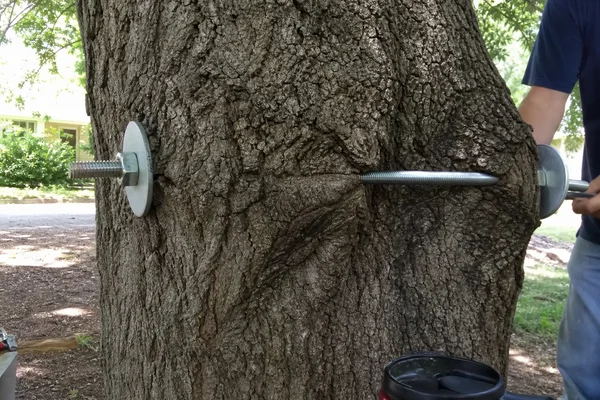
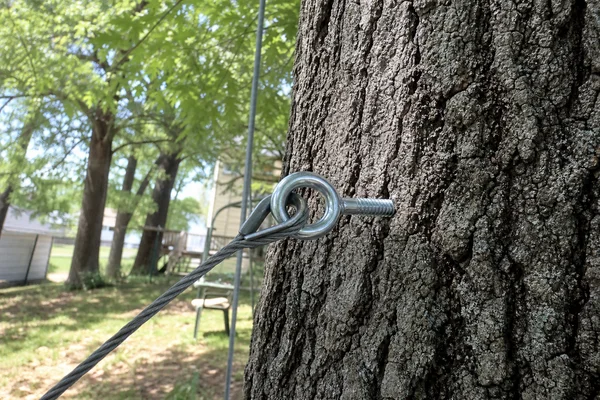
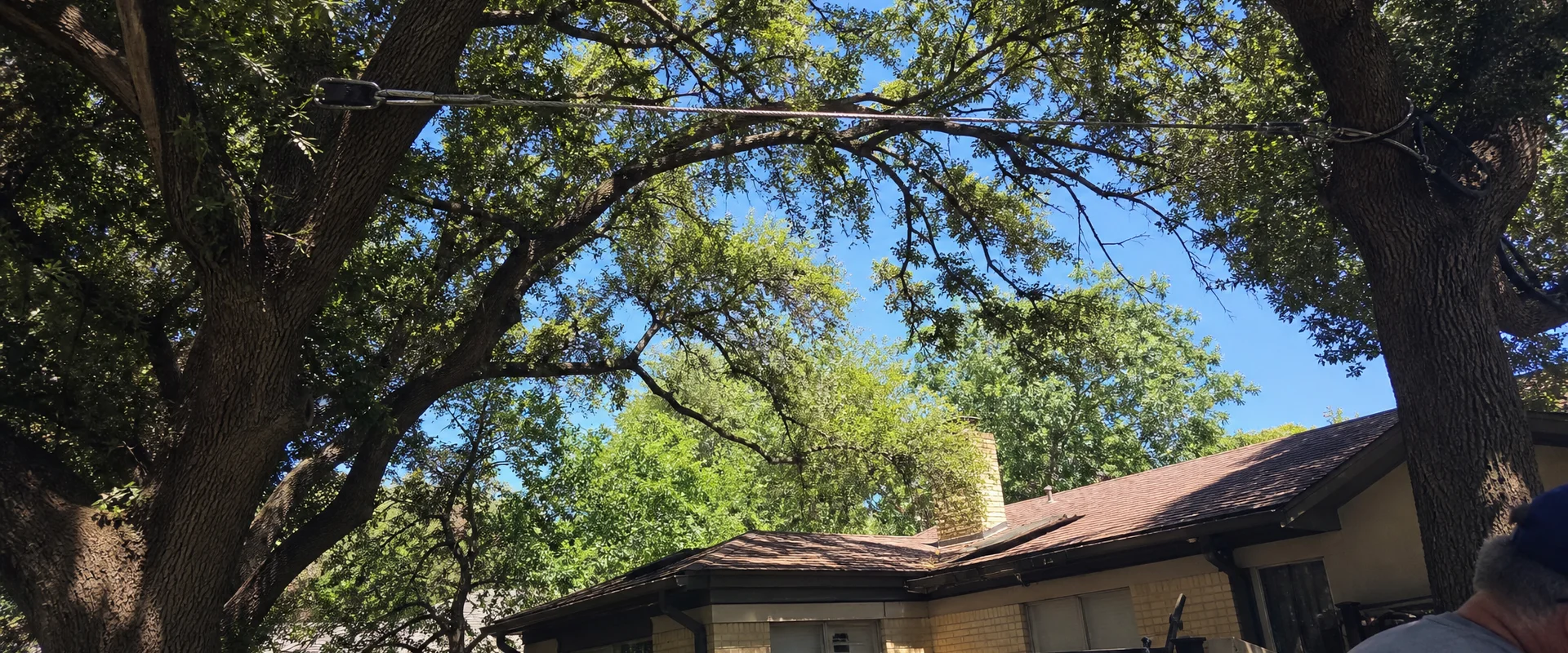
Cabling is installed in the upper crown between two leaders and takes load off the weak union — think of it as an insurance policy against catastrophic splitting in a wind event. Bracing is different: rods pass through the union itself and hold split-prone wood together mechanically.

Real installations follow ANSI A300 Part 3 standards for structural support systems. Hardware size, attachment method, and cable geometry are all specified against the defect and the tree size. Field improvisation with hardware-store hardware is how cables fail — we do not do that.

When Bracing Is the Right Call

  • Valuable heritage trees in landscape-critical positions (front-yard oak, shade over a patio, family-history pecan).
  • Fixable structural weakness — a co-dominant union without included bark, in sound wood.
  • Otherwise-healthy tree — good root system, healthy canopy, no significant decay.
  • Owner is committed to inspection — cabling requires a schedule to check hardware and cambial growth.

If the tree is already compromised beyond bracing, the honest answer is a scheduled removal — often with a crane, given the size of West Texas trees. See Crane-Assisted Tree Removal.

The Cost Question

Bracing runs $300–$2,500 per tree depending on tree size, cable count, and hardware. For most residential heritage trees the number lands in the middle of that range. When compared to the cost of a large crane removal in the $5,000–$12,000 range, the case for preserving the tree can be strong.

Start With an Assessment

If you have a prized tree you are worried about, book a Hazardous Tree Assessment first. The assessment tells you whether cabling is even an option, and if it is, we can quote the install on the same visit. Call (325) 555-9111 to set it up.

Last updated: July 13, 2026
How It Works

How Cabling & Bracing Works

01

Candidacy Assessment

Not every weak union can be braced. We assess whether the wood is sound enough to hold hardware and whether bracing will meaningfully extend the safe life of the tree.

02

Hardware Selection

Static or dynamic cabling, through-rod bracing, or a combination — chosen against ANSI A300 Part 3 standards for the specific defect and tree size.

03

Installation

Cables are installed in the upper crown to redistribute load away from the weak union. Bracing rods pass through the union itself to hold split-prone wood together.

04

Inspection Schedule

Cabled trees need periodic inspection. We set a re-inspection schedule with you and note it in your records.

Work in the Field

Real Jobs, Real Photos

Arborist installing steel cable between co-dominant leaders
Through-rod bracing hardware installed in trunk union
Close-up of cable termination hardware
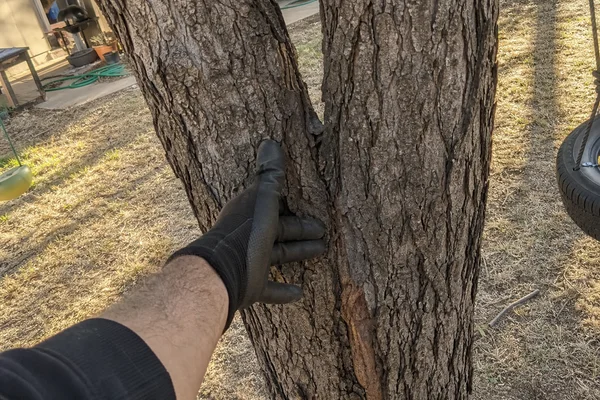
Assessment of included bark in a co-dominant union
Why Us for This

What Sets Our Cabling & Bracing Work Apart

ANSI A300 Compliant

Hardware and technique follow ANSI A300 Part 3 for structural support systems.

Honest Candidacy Calls

If bracing will not meaningfully help the tree, we say so — sometimes the right answer is [removal](/emergency-tree-removal/).

Heritage Tree Preservation

For prized oaks and pecans, we specialize in options that keep the tree standing when possible.

Ready to move forward?

Fully licensed and heavily insured. Real dispatcher, 24/7. No obligation for assessments.

Common Questions

Frequently Asked Questions About Tree Cabling & Bracing in San Angelo

Can any tree be cabled or braced? +

No. The wood at the attachment points has to be structurally sound and free of significant decay. Trees with heartwood rot or Ganoderma root rot are usually not good candidates.

How long does cabling last? +

Properly installed cabling can extend the safe life of a tree by decades, but the hardware needs periodic inspection — typically annual — to catch cambial growth over hardware or corrosion.

Does cabling replace removal? +

Sometimes. For a valuable heritage tree with a fixable structural weakness, yes. For a tree with widespread decay or root issues, no — that is a removal call. Start with a [Hazardous Tree Assessment](/hazardous-tree-assessment/).

Ready to schedule Cabling & Bracing?

Real dispatcher, 24/7. Fully licensed and heavily insured for high-liability tree work in San Angelo and the Concho Valley.

Call Now